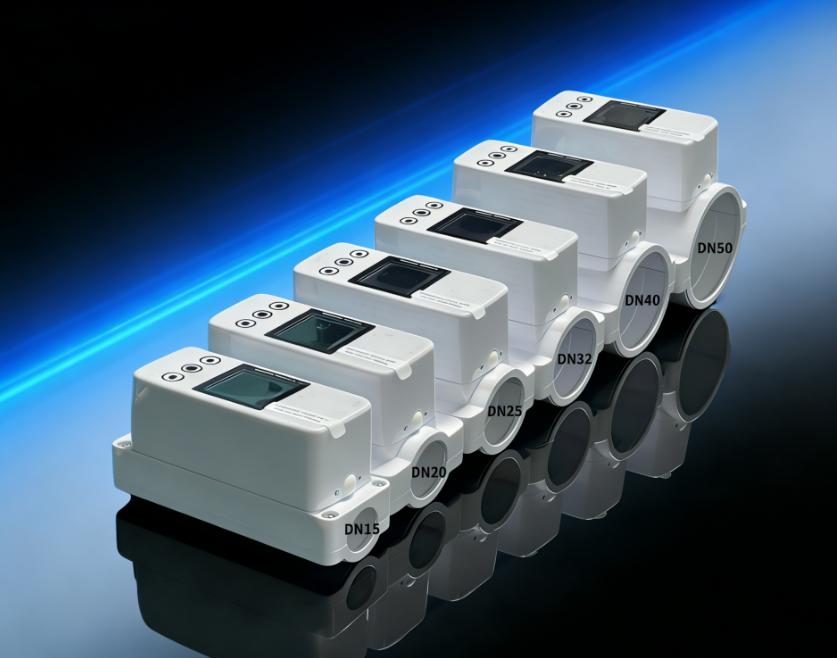
Data is the lifeblood of modern water management. However, gathering "traffic data" (fluid flow rates) in remote or hard-to-reach locations has historically been a logistical nightmare. LoRaWAN has changed the game, and the GFR Ultrasonic Flowmeter is leading the charge.
A 3-Step Guide to Remote Flow Data Acquisition
1. Hardware Selection: The GFR Advantage For long-term monitoring, you need reliability. The GFR supports a wide range of pipe materials (PVC, Stainless Steel, Copper, PPR) and is designed for pipe sizes from DN10 to DN50. Its 1.54" LCD color display even rotates 360°, making it easy to read in any orientation during field setup.
2. Seamless Connectivity: The GFR utilizes LoRaWAN to transmit data at low frequencies with minimal complexity and cost. This makes it ideal for "set-it-and-forget-it" installations where power consumption and transmission distance are the primary constraints.
3. Rapid Field Installation :
- Step 1: Clean the pipe surface to ensure optimal sensor contact.
- Step 2: Snap the upper and lower clamps onto the pipe.
- Step 3: Secure the four screws for a stable, no-looseness fit.
- Step 4: Power on and configure the pipe parameters via the menu.
Pro Tip: Use the GFR's signal quality (SQ) display to verify the network connection status immediately after installation, ensuring your data pipeline is active before leaving the site.