


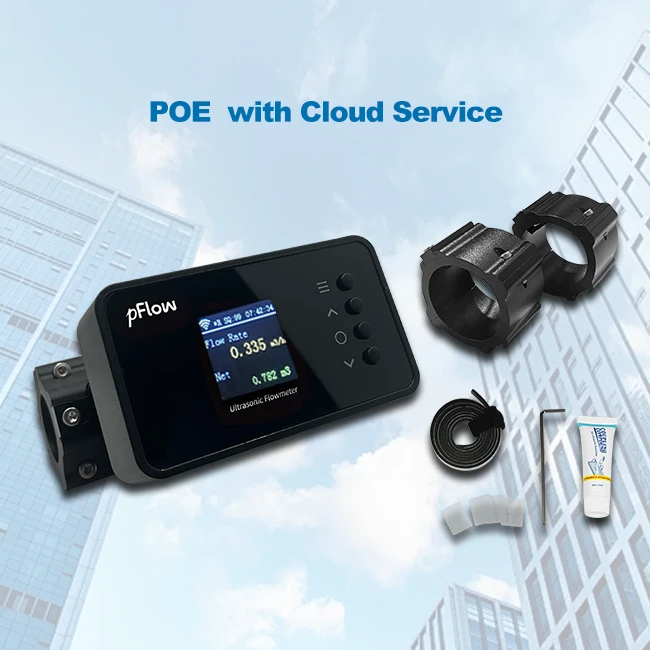
Product Introduction
Thermal energy meter E3W adopts the ultrasonic time difference method measurement principle, combined with Gentos' ultrasonic flow algorithm technology, to achieve accurate measurement of fluid flow and heat(cold) volume in the pipeline. The product is easy for installation and usage.
Heat energy meter have a wide range of applications in heat balance regulation. Heat balance regulation refers to adjusting the input and output of heat to achieve a stable state of thermal equilibrium in a system. An ultrasonic BTU meter is an instrument used to measure the heat of a fluid. It utilizes ultrasonic technology to measure the flow rate and temperature of the fluid, and then calculates the heat of the fluid.
In heat balance regulation, ultrasonic thermal energy meter E3W can be used to monitor and control the input and output of heat. By continuously measuring the flow rate and temperature of the fluid, ultrasonic heat meters can provide accurate calculations of heat. This data can be used to adjust the input of heat, such as controlling the power output of heating or cooling systems, to achieve the desired state of thermal equilibrium.
Additionally, our E3W can be used to detect energy losses or leaks in a system. By monitoring the flow of heat in the fluid, energy loss points in the system can be identified and repaired in a timely manner, thereby improving the efficiency of thermal balance in the system.
In summary, the applications of heat energy meter in heat balance regulation include monitoring and controlling the input and output of heat, as well as detecting energy losses in the system. They can help achieve thermal equilibrium in a system and improve energy utilization efficiency.
Product specification
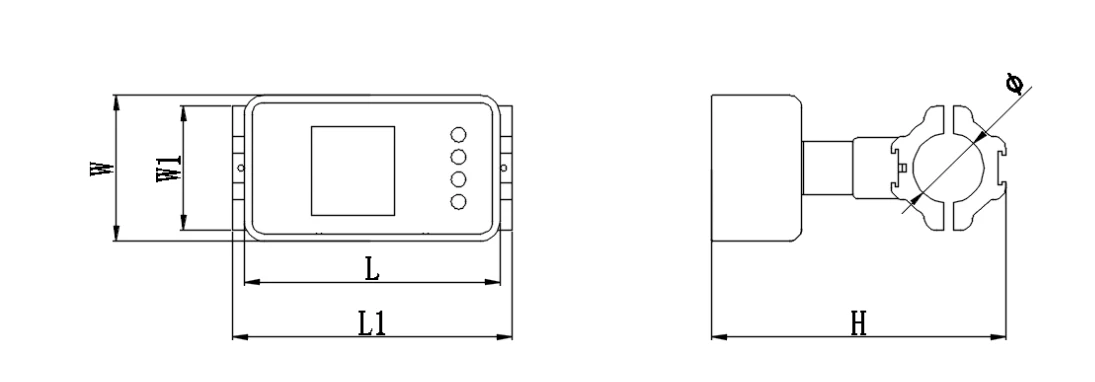
1) Body Parameters
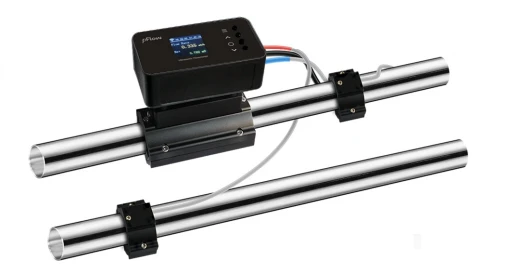
2) Device Wiring
3)Technical Parameters
|
Performance Specifications |
|
|
Flow velocity |
0.03~5.0 m/s |
|
Pipe Size |
DN20~DN80 |
|
Measured medium |
water |
|
Pipe Material |
Carbon steel, Stainless Steel, Copper, PVC (According to the user's model selection, the model has been determined at the time of delivery.) |
|
Function Index |
|
|
Input interface |
2*PT1000 Clamp-on temperature sensor 0~100℃(32~212℉) |
|
Communication Interface |
RS485(standard); Support FUJI Protocol and MODBUS Protocol |
|
Power supply |
10~36VDC/500mA |
|
Keyboard |
4 touch keys |
|
Display screen |
1.44 " LCD colorful screen, resolution 128 * 128 |
|
Temperature range |
Transmitter installation ambient temperature: 14 °F to 122 °F ( –10℃~50℃ ) Transducer measures medium temperature: 32 °F to 140 °F ( 0℃ ~ 60℃ ). |
|
Humidity |
Relative humidity 0~99%, No condensation |
|
IP Rating |
IP54 |
|
Physical Characteristics |
|
|
Transmitter |
Integrated |
|
Transducer |
Clamp-on |
|
Cable |
φ5 six core cable, standard length: 2m |
Applications
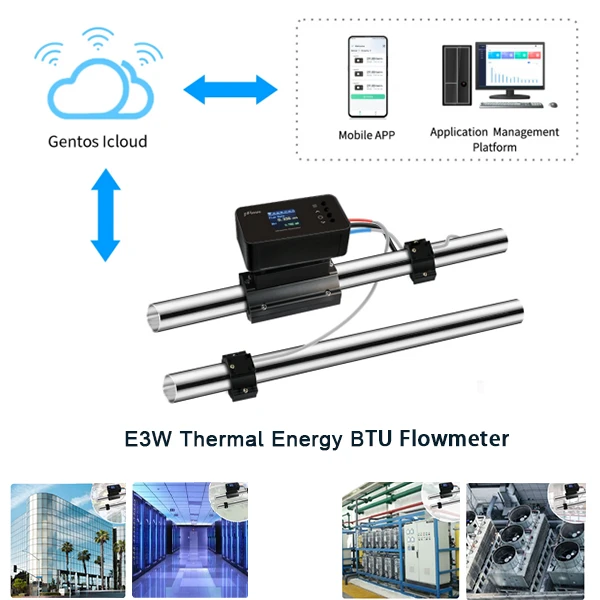
Thermal energy sensor have a wide range of applications in the chemical industry. Here are some common application areas:
Thermal energy meter E3W are highly versatile and find extensive use in the chemical industry due to their ability to accurately measure flow rates of various chemicals, gases, and liquids. These flow meters offer numerous benefits, including non-intrusive installation, wide turndown ratio, and minimal pressure drop. In the chemical industry, ultrasonic flow meters are employed in a wide range of applications across different stages of the production process. Here are detailed descriptions of some common application areas:
1. Process Monitoring:
Superstatic heat meter play a crucial role in monitoring and controlling the flow rates of chemicals during the manufacturing process. By accurately measuring the flow rates, these flow meters provide real-time data for process optimization and enable operators to ensure efficient operations. They can be installed at different points in the production line to monitor the flow rates at various stages, facilitating better control over the process.
2. Chemical Injection Control:
In chemical processes that involve the injection of chemicals into a system, such as in water treatment or chemical dosing applications, precise control of flow rates is essential. Ultrasonic flow meters offer high accuracy and repeatability in measuring and monitoring the flow of chemicals during injection. Operators can rely on the measurements provided by these flow meters to ensure the correct dosage and maintain the desired chemical concentration.
3. Custody Transfer:
Accurate measurement of chemicals during custody transfer is critical to ensure fair transactions between parties. Ultrasonic flow meters excel in custody transfer applications due to their high accuracy and reliability. They provide precise measurements of the quantity of chemicals being transferred, which is crucial for billing purposes. Their non-intrusive installation also reduces maintenance and operational costs.
4. Leak Detection:
Detecting leaks in chemical pipelines is vital for preventing accidents, minimizing losses, and ensuring the safety of personnel and the environment. Ultrasonic flow meters can be used for leak detection by comparing the flow rates at different points along the pipeline. If there is a discrepancy between expected and measured flow rates, it indicates a potential leak. This early detection allows operators to take immediate action to mitigate the leak, minimizing damage and reducing downtime.
5. Blending and Mixing:
In chemical processes that involve blending or mixing different chemicals, precise flow rate control is essential to achieve accurate proportions and maintain product quality. Ultrasonic flow meters enable real-time monitoring and control of the flow rates of individual components during blending and mixing operations. This ensures that the desired chemical ratios are maintained, resulting in consistent and high-quality end products.
6. Tank Farm Management:
Ultrasonic thermal energy meterare widely used in tank farm management, where the accurate measurement of chemicals entering or leaving storage tanks is crucial. These flow meters are employed to measure the flow rates of chemicals during loading and unloading operations, enabling efficient inventory management. By providing real-time data on the amount of chemicals in the tanks, they facilitate better logistics planning and prevent overfilling or underfilling of storage tanks.
In addition to these specific application areas, ultrasonic flow meters are also preferred for their high accuracy, wide operating range, low maintenance requirements, and compatibility with a wide range of chemicals. They can be easily integrated into control systems and provide reliable and continuous measurements. However, it's important to consider factors such as the chemical properties, flow conditions, and installation requirements when selecting and utilizing ultrasonic flow meters in the chemical industry.
Product Qualification
Gentos has been a reputable manufacturer of ultrasonic flow meters for more than three decades. They are known for their high-quality products and competitive pricing.
As pioneers in the field of eco-friendly products and innovation, we work to raise the bar for the sector while maintaining affordable prices.
Over time, Gentos has continually strived to improve the functionality, quality, and performance of their product line to advance the industry.
We actively seek input from their customers throughout the design process and value their contributions
It is this collaborative model that has allowed Gentos to distinguish itself and establish a unique position in an industry that demands the perfect combination of security and performance.
Company environment display:


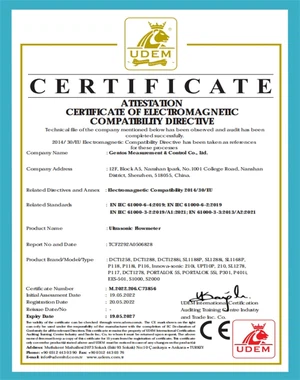
Certificate display:



Deliver, Shipping, and Serving



Shipping
With an unwavering commitment to customer satisfaction, Gentos has devised an accelerated delivery system, assuring prompt product acquisition. With utmost efficiency, Gentos expedites order processing and product dispatch, aiming to complete the process within a swift 2 to 3-day window. Complemented by an assortment of transportation and express delivery options, Gentos prioritizes a seamless customer journey.
FAQ
Q: What is the purpose of BTU meter?
A: The purpose of a BTU meter is to measure and monitor the amount of heat energy (in British Thermal Units or BTUs) transferred in a heating or cooling system. BTU meters are commonly used in commercial, industrial, and residential buildings to accurately measure the energy consumption for heating or cooling purposes.
Q: What is an ultrasonic heat meter?
A: An ultrasonic heat meter, also known as an ultrasonic energy meter or ultrasonic flow meter, is a type of heat meter that utilizes ultrasonic technology to measure and monitor the flow and energy consumption in a heating or cooling system.
Q: How does a thermal energy meter work?
A:The temperature difference between the supply and return points, along with the flow rate data, is used to calculate the heat energy transferred. The heat calculation is based on the principle of thermal energy transfer, which states that the amount of heat transferred is directly proportional to the temperature difference and flow rate.
Q: What are the benefits of a BTU meter?
A:BTU meters provide valuable data regarding the energy usage patterns, temperature differences, and flow rates within a heating or cooling system. This information allows for better system control and optimization, leading to improved energy efficiency and comfort levels.
Q: How many kHz is ultrasonic?
A: Ultrasonic refers to sounds that have a frequency higher than the upper limit of human hearing, which is typically around 20 kHz. Therefore, ultrasonic frequencies are generally above 20 kHz. The specific range for ultrasonic frequencies can vary, but it commonly falls between 20 kHz and 200 kHz.
Hot Tags: thermal energy meter, China thermal energy meter manufacturers, suppliers, factory, Heat Energy Meter, BTU Meter for Chilled Water, BTU Meter, IoT Ball Valve, BTU Meter in HVAC, HVAC BTU Meter