


Product Introduction
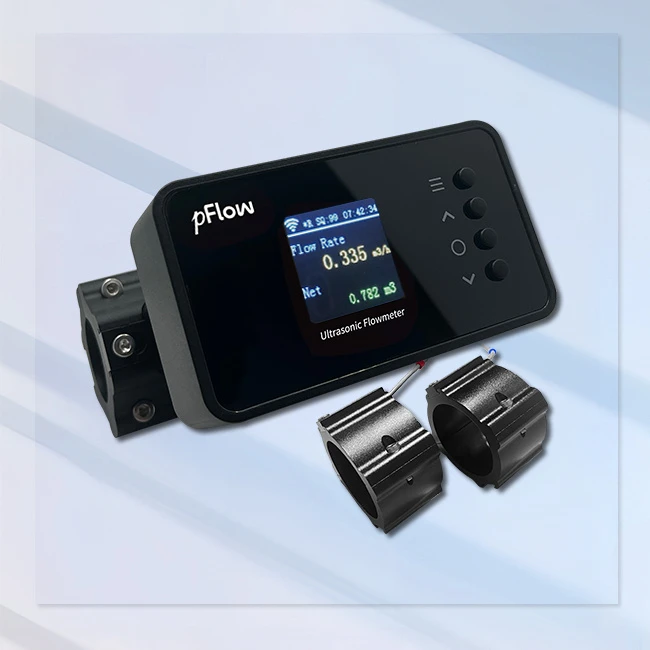
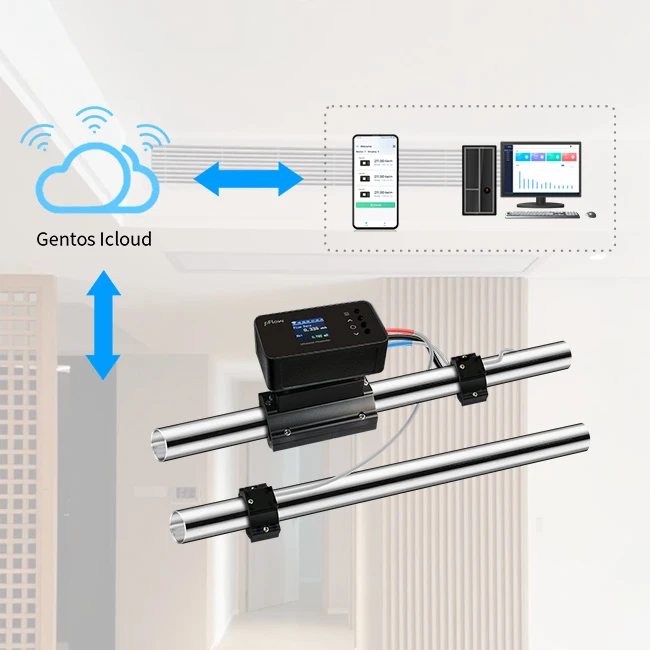
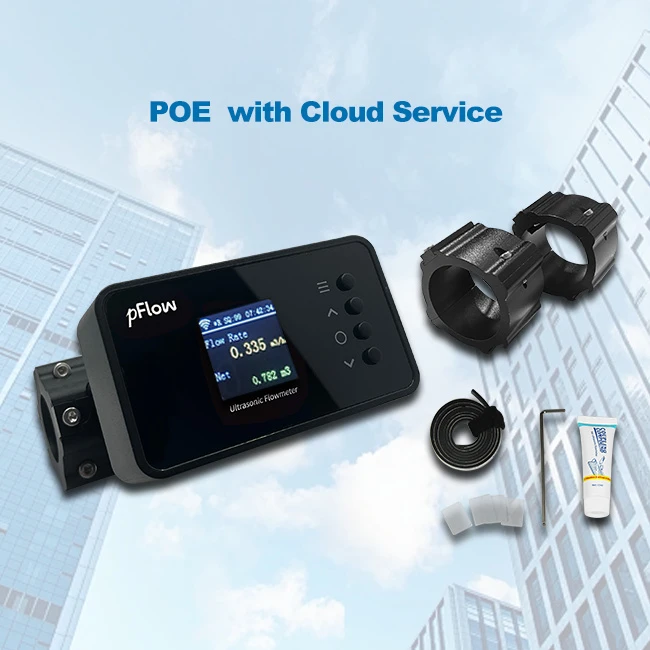
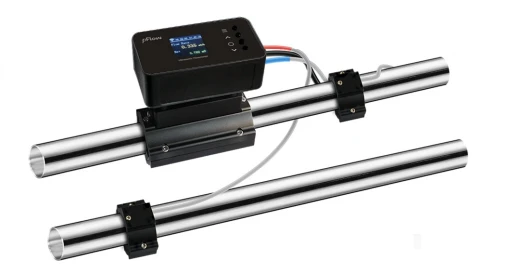
Thermal energy meter E3W adopts the ultrasonic time difference method measurement principle, combined with Gentos' ultrasonic flow algorithm technology, to achieve accurate measurement of fluid flow and heat(cold) volume in the pipeline. The product is easy for installation and usage.
Heat energy meter have a wide range of applications in heat balance regulation. Heat balance regulation refers to adjusting the input and output of heat to achieve a stable state of thermal equilibrium in a system. An ultrasonic BTU meter is an instrument used to measure the heat of a fluid. It utilizes ultrasonic technology to measure the flow rate and temperature of the fluid, and then calculates the heat of the fluid.
In heat balance regulation, ultrasonic thermal energy meter E3W can be used to monitor and control the input and output of heat. By continuously measuring the flow rate and temperature of the fluid, ultrasonic heat meters can provide accurate calculations of heat. This data can be used to adjust the input of heat, such as controlling the power output of heating or cooling systems, to achieve the desired state of thermal equilibrium.
Additionally, our E3W can be used to detect energy losses or leaks in a system. By monitoring the flow of heat in the fluid, energy loss points in the system can be identified and repaired in a timely manner, thereby improving the efficiency of thermal balance in the system.
In summary, the applications of heat energy meter in heat balance regulation include monitoring and controlling the input and output of heat, as well as detecting energy losses in the system. They can help achieve thermal equilibrium in a system and improve energy utilization efficiency.
Product specification
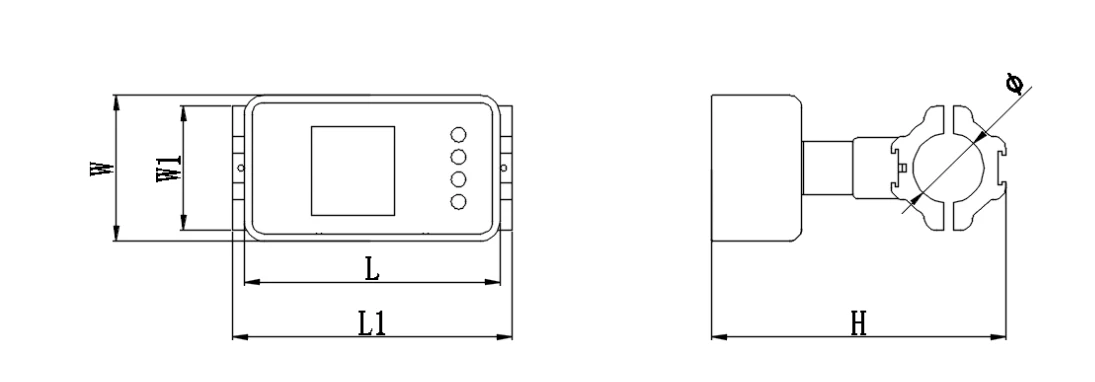
1) Body Parameters
2) Device Wiring
3)Technical Parameters
|
Performance Specifications |
|
|
Flow velocity |
0.03~5.0 m/s |
|
Pipe Size |
DN20~DN80 |
|
Measured medium |
water |
|
Pipe Material |
Carbon steel, Stainless Steel, Copper, PVC (According to the user's model selection, the model has been determined at the time of delivery.) |
|
Function Index |
|
|
Input interface |
2*PT1000 Clamp-on temperature sensor 0~100℃(32~212℉) |
|
Communication Interface |
RS485(standard); Support FUJI Protocol and MODBUS Protocol |
|
Power supply |
10~36VDC/500mA |
|
Keyboard |
4 touch keys |
|
Display screen |
1.44 " LCD colorful screen, resolution 128 * 128 |
|
Temperature range |
Transmitter installation ambient temperature: 14 °F to 122 °F ( –10℃~50℃ ) Transducer measures medium temperature: 32 °F to 140 °F ( 0℃ ~ 60℃ ). |
|
Humidity |
Relative humidity 0~99%, No condensation |
|
IP Rating |
IP54 |
|
Physical Characteristics |
|
|
Transmitter |
Integrated |
|
Transducer |
Clamp-on |
|
Cable |
φ5 six core cable, standard length: 2m |
Applications
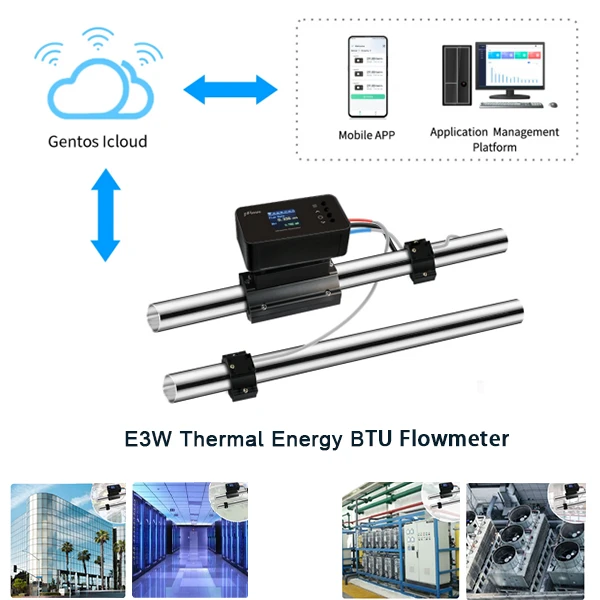
Thermal energy sensor have a wide range of applications in the chemical industry. Here are some common application areas:
Thermal energy meter E3W are highly versatile and find extensive use in the chemical industry due to their ability to accurately measure flow rates of various chemicals, gases, and liquids. These flow meters offer numerous benefits, including non-intrusive installation, wide turndown ratio, and minimal pressure drop. In the chemical industry, ultrasonic flow meters are employed in a wide range of applications across different stages of the production process. Here are detailed descriptions of some common application areas:
1. Process Monitoring:
Superstatic heat meter play a crucial role in monitoring and controlling the flow rates of chemicals during the manufacturing process. By accurately measuring the flow rates, these flow meters provide real-time data for process optimization and enable operators to ensure efficient operations. They can be installed at different points in the production line to monitor the flow rates at various stages, facilitating better control over the process.
2. Chemical Injection Control:
In chemical processes that involve the injection of chemicals into a system, such as in water treatment or chemical dosing applications, precise control of flow rates is essential. Ultrasonic flow meters offer high accuracy and repeatability in measuring and monitoring the flow of chemicals during injection. Operators can rely on the measurements provided by these flow meters to ensure the correct dosage and maintain the desired chemical concentration.
3. Custody Transfer:
Accurate measurement of chemicals during custody transfer is critical to ensure fair transactions between parties. Ultrasonic flow meters excel in custody transfer applications due to their high accuracy and reliability. They provide precise measurements of the quantity of chemicals being transferred, which is crucial for billing purposes. Their non-intrusive installation also reduces maintenance and operational costs.
4. Leak Detection:
Detecting leaks in chemical pipelines is vital for preventing accidents, minimizing losses, and ensuring the safety of personnel and the environment. Ultrasonic flow meters can be used for leak detection by comparing the flow rates at different points along the pipeline. If there is a discrepancy between expected and measured flow rates, it indicates a potential leak. This early detection allows operators to take immediate action to mitigate the leak, minimizing damage and reducing downtime.
5. Blending and Mixing:
In chemical processes that involve blending or mixing different chemicals, precise flow rate control is essential to achieve accurate proportions and maintain product quality. Ultrasonic flow meters enable real-time monitoring and control of the flow rates of individual components during blending and mixing operations. This ensures that the desired chemical ratios are maintained, resulting in consistent and high-quality end products.
6. Tank Farm Management:
Ultrasonic thermal energy meterare widely used in tank farm management, where the accurate measurement of chemicals entering or leaving storage tanks is crucial. These flow meters are employed to measure the flow rates of chemicals during loading and unloading operations, enabling efficient inventory management. By providing real-time data on the amount of chemicals in the tanks, they facilitate better logistics planning and prevent overfilling or underfilling of storage tanks.
In addition to these specific application areas, ultrasonic flow meters are also preferred for their high accuracy, wide operating range, low maintenance requirements, and compatibility with a wide range of chemicals. They can be easily integrated into control systems and provide reliable and continuous measurements. However, it's important to consider factors such as the chemical properties, flow conditions, and installation requirements when selecting and utilizing ultrasonic flow meters in the chemical industry.
Product Qualification
Gentos has been a reputable manufacturer of ultrasonic flow meters for more than three decades. They are known for their high-quality products and competitive pricing.
As pioneers in the field of eco-friendly products and innovation, we work to raise the bar for the sector while maintaining affordable prices.
Over time, Gentos has continually strived to improve the functionality, quality, and performance of their product line to advance the industry.
We actively seek input from their customers throughout the design process and value their contributions
It is this collaborative model that has allowed Gentos to distinguish itself and establish a unique position in an industry that demands the perfect combination of security and performance.


Why Choose Us
Comprehensive System
Gentos operates as a cohesive unit, with all departments working closely together to provide efficient and professional services to our customers.
Professional Solutions
We provide professional solutions to customers with diverse flow meter requirements and limited understanding of flow meter parameters in their applications.
Caring Service
Our technicians are committed to providing prompt and exceptional support to customers, addressing their challenges with efficiency and professionalism.
Technical Expertise
Gentos personnel are certified and our production processes and products meet quality and technical standards.
What is a Thermal Energy Meter?
A thermal energy meter, also known as a heat meter, is a device used to measure the amount of thermal energy that is transferred in a building through heating and cooling systems. It is designed to calculate the quantity of heat that has been delivered to or removed from a particular space or water system, which is essential for managing energy consumption and billing in commercial, residential, and industrial applications.
Thermal energy meters typically consist of sensors that detect the temperature of the fluid flowing through a pipe, such as water or antifreeze solutions, and a flow meter that measures the rate at which the fluid moves. By combining these measurements, the meter calculates the thermal energy transfer based on the formula: Q = m*c*ΔT, where Q is the thermal energy (in joules or BTUs), m is the mass flow rate of the fluid (in kilograms per second), c is the specific heat capacity of the fluid, and ΔT is the temperature difference between the inlet and outlet of the system.
Why is a Thermal Energy Meter Used?
A thermal energy meter, also known as an energy meter or heat meter, is used to measure the amount of thermal energy that is transferred from a heating system to a building or from a cooling system from a building. The primary purposes of using a thermal energy meter are:
Billing and Cost Allocation: In multi-occupancy buildings or district heating systems, thermal energy meters are used to accurately bill tenants or consumers based on the thermal energy they consume. This ensures fair cost allocation among different users.
Energy Efficiency Monitoring: By measuring the thermal energy usage, building managers and homeowners can monitor their consumption patterns. This information helps identify opportunities for improving energy efficiency and reducing costs.
System Performance Analysis: Thermal energy meters provide data that can be used to analyze the performance of heating and cooling systems. This data aids in diagnosing issues, optimizing system operations, and planning necessary maintenance or upgrades.
Sustainability Reporting: Organizations may use thermal energy meters to track their energy consumption for sustainability reporting. Accurate measurements contribute to corporate responsibility goals and help in complying with environmental regulations.
Demand Response: In smart grid applications, thermal energy meters can provide real-time data on energy consumption, allowing consumers and suppliers to respond to demand fluctuations and optimize energy usage.
Types of Thermal Energy Meter
Heat meters can be categorized into two main types:
1. Calorimetric Heat Meters: These directly measure the amount of heat energy transferred by using heat sensors or transducers that detect the change in temperature of a fluid or a solid material within the meter itself.
2. Volumetric Heat Meters: These measure the volume of fluid passing through the meter and the temperature difference, then apply the specific heat capacity of the fluid to calculate thermal energy.
Thermal energy meters are equipped with electronic units that can store and communicate data, often integrating with Building Management Systems (BMS) or other smart technologies for remote monitoring and control. Accurate measurement of thermal energy enables users to optimize their heating and cooling systems for efficiency, reduce energy costs, and ensure equitable distribution of heating costs among residents or tenants in multi-occupancy buildings.

Choosing the right thermal energy meter can be a bit overwhelming, but here are some factors to consider that will help you make an informed decision:
System type: Determine the type of heating or cooling system you have, as different meters may be suitable for specific systems, such as radiator heating, underfloor heating, or air conditioning.
Measurement range: Consider the expected range of thermal energy flow in your system to ensure the meter you choose can accurately measure the desired levels.
Accuracy requirements: Depending on your application, you may need a higher or lower level of measurement accuracy. Higher accuracy meters may be more expensive.
Compatibility: Make sure the meter is compatible with your existing infrastructure, including pipe sizes, electrical connections, and communication protocols.
Features and functionality: Look for meters that offer the features you need, such as data logging, remote monitoring, or integration with building management systems.
Quality and reliability: Research the reputation of the meter manufacturer and read reviews or ask for recommendations from others in the industry.
Cost: Compare the prices of different meters while considering the overall value and long-term savings they can offer.
Installation and maintenance: Consider the ease of installation and any required maintenance or calibration procedures.
How Accurate are Thermal Energy Meters?
The accuracy of thermal energy meters can vary depending on several factors, including the quality of the meter, proper installation, and regular calibration. In general, well-designed and properly maintained thermal energy meters can provide relatively accurate measurements.Manufacturers of thermal energy meters typically specify their accuracy levels in terms of a percentage or a specific range. These accuracy specifications are usually based on tests and standards set by industry organizations or regulatory bodies.However, it's important to note that accuracy can be influenced by factors such as temperature fluctuations, flow conditions, and the quality of the heat-transfer fluid. To ensure the highest level of accuracy, it's crucial to follow the manufacturer's instructions for installation, operation, and calibration.Regular calibration of the thermal energy meter is essential to maintain its accuracy. Calibration involves comparing the meter's readings with a known standard or reference and making any necessary adjustments. This helps ensure the meter is providing reliable and consistent measurements.It's also worth mentioning that even the most accurate meter may have some degree of measurement uncertainty. This uncertainty can be minimized by proper installation, calibration, and by using the meter within its specified operating range and conditions.
Are Thermal Energy Meters Affected By Temperature Changes?
Thermal energy meters, especially those based on heat loss or gain principles, can indeed be influenced by temperature changes. These meters typically measure the difference in temperature between two points-often the supply and return flows of a heating or cooling system-and correlate this with the flow rate to calculate the total energy transfer.
Fluid Properties: The thermal conductivity and specific heat capacity of the fluid being measured change with temperature. Accurate energy calculations rely on knowing these properties at the actual temperatures within the system. Therefore, if the meter is calibrated for a specific temperature range and significant deviations occur, the readings may not be accurate.
Calibration: Thermal energy meters are generally calibrated for a specific range of operating conditions, including temperature. If the operating temperature falls outside this calibrated range, the accuracy of the meter can be compromised.
Compensation Methods: To minimize the effect of temperature changes, many thermal energy meters employ compensation techniques such as dual sensor configurations or temperature-compensated flow measurement. However, these methods must be properly designed and maintained to function effectively across a range of temperatures.
Metering Technology: Different types of thermal energy meters, such as volume flow meters with integral temperature sensors, calorimetric meters with built-in temperature compensation, or ultrasonic flow meters with advanced signal processing, have varying sensitivities to temperature changes. Some technologies are inherently more robust against temperature variations than others.
To ensure accurate thermal energy measurements over a range of temperatures, it is important to select a meter that is appropriate for the expected temperature conditions and to maintain it according to the manufacturer's specifications. Regular calibration and monitoring of the meter's performance can further help in maintaining accuracy despite changing temperatures.
The Principle of Heat Energy Meter and Its Battery Usage Instructions
Overview of the heat meter
In winter, heating is required in the north. In order to save energy and reduce smoke and dust, most areas have centralized heating through the heating network. In the past, because residents did not install heat meters in their homes, they had to charge based on the building area. However, it is obviously unreasonable to charge heating fees according to the building area, and it should be calculated according to the heat energy actually used by the users.
An instrument that automatically accumulates heat; the application of heat energy meters solves this problem. The thermal energy meter is a brand-new technological invention. It not only has the functions of several other thermal instruments, such as temperature meters and flow meters, but also completes the automatic, fast and accurate measurement of thermal energy.
So it is not a combination of several thermal instruments, but a technological qualitative leap. The characteristic of the thermal energy meter is that it can not only complete the rapid, automatic and accurate measurement of heat energy, but also complete the measurement of the amount of hot water lost by the radiator. At the same time, the heat dissipation of the radiator can be adjusted.
The thermal energy meter consists of three parts, which are the feedwater sensor control device, the return water sensor device and the central data logic processing control device. The feedwater sensor control device It is also composed of a feedwater temperature sensor, a feedwater flow sensor and an electromagnetic regulating valve; the backwater sensing device is composed of a backwater temperature sensor and a backwater flow sensor; the central data logic processing control device is the core component of the heat meter, which is composed of a logic integrated circuit The temperature and flow value of the feed water and return water of the radiator delivered by the sensors are used. According to the liquid during the heat transfer process, there is no change in the state of the liquid but only when the temperature changes (such as the temperature of the liquid rises or Decrease) is the characteristic that the heat absorbed or released is proportional to the temperature of the object, that is, Qu003dcm△t, and the heat dissipation capacity of the radiator is calculated. And the central data logic processing control device can also calculate the amount of water lost through the radiator.
The working principle of the heat meter: install a pair of temperature sensors on the up and down pipes that pass the heat-carrying fluid, and install the flowmeter on the fluid inlet or return pipe (the flowmeter is installed at different positions , The final measurement results are also different), the flow meter sends out a pulse signal that is proportional to the heat meter and the flow rate, a pair of temperature sensors gives an analog signal indicating the temperature level, and the integrator collects the signals from the flow rate and temperature sensors, and uses the product The calculation formula calculates the heat obtained by the heat exchange system.
The meter reading system of the thermal energy meter: Smart thermal energy meters use wireless meter reading (such as thermal GPRS wireless meter reading, far infrared meter reading, etc.), and there is a signal transmission in the central data logic processing control device And receiving device. Thermal energy meter's battery requirements All these tasks of thermal energy meter require a power source to complete. As the power supply of a smart heat meter, it must have a stable working voltage, a long working life (more than 6 years), a wide working temperature range and be able to withstand high temperature and humidity (such as -55℃~+85℃, RH90% Above) working or storage conditions.
Typical working mode of thermal energy meter: Generally, the thermal energy meter does not consume large current, but requires high reliability and long life of the battery.
Thermal energy meters, like any other mechanical or electronic device, require regular maintenance to ensure accurate readings, longevity, and reliability. The specific maintenance requirements can vary depending on the type of meter (for example, heat flux sensors, heat loss monitors, or calorimeters), the environment in which it operates, and the manufacturer's recommendations.
Here are some general maintenance tasks that may be required for thermal energy meters:
1. Cleaning: Regular cleaning of the sensors and other exposed parts is necessary to prevent the accumulation of dust, dirt, or debris that could interfere with the meter's accuracy.
2. Calibration: Over time, the accuracy of a thermal energy meter can drift due to wear and environmental factors. Calibration against traceable standards should be performed at regular intervals to ensure measurement precision.
3. Inspection: Periodic inspection of the meter's components can help detect early signs of wear or damage, allowing timely repairs before they affect the meter's functionality.


4. Checking connections: Loose or corroded electrical connections can lead to measurement errors or even meter failure. Regularly checking and tightening connections, if necessary, can help maintain the meter's performance.
5. Software updates: If the thermal energy meter is connected to a digital system or has firmware, it may require occasional software updates to fix bugs, improve functionality, or implement new features.
6. Environmental monitoring: The meter's environment can significantly impact its operation. Monitoring environmental conditions such as humidity, vibration, and temperature is important to ensure that the meter remains within its operational specifications.
7. Replacing consumables: Depending on the design, certain parts of the meter may be consumable or have a limited lifespan, like seals or batteries. These should be replaced according to the manufacturer's recommendations.
What Tool is Used to Measure Thermal Energy?
A calorimeter is the tool used to measure thermal energy. Calorimeters work on the principle of conservation of energy, where the heat absorbed by the calorimeter is equal to the heat released by the system being measured. By measuring the temperature change of the calorimeter's contents before and after the transfer of thermal energy, one can calculate the amount of heat involved in the process. There are various types of calorimeters, ranging from simple classroom demonstrations to sophisticated instruments used in scientific research.
An electricity meter and an energy meter are both devices used to measure the consumption of a specific form of energy, but there are some differences between them:
Measurement focus: An electricity meter specifically measures the amount of electricity used, typically in kilowatt-hours (kWh). An energy meter, on the other hand, can measure various forms of energy, including electricity, gas, or thermal energy.
Functionality: While an electricity meter only measures the electrical energy consumption, an energy meter may have additional features such as measuring power factor, voltage, current, or other parameters related to the energy being measured.
Application: Electricity meters are commonly used in residential, commercial, and industrial settings to bill for electrical consumption. Energy meters can be used in a wider range of applications, including monitoring and managing energy usage in buildings, renewable energy systems, or industrial processes.
Data collection and reporting: Some energy meters may have advanced capabilities for data collection, storage, and reporting, allowing for more detailed analysis of energy consumption patterns and efficiency.
Gentos Measurement & Control Co., Ltd is a leading manufacturer of ultrasonic flowmeters with over three decades of experience in fluid measurement.
Our pFlow brand has gained a strong reputation and is highly regarded in Asia, Europe, and America. Gentos Product line includes Clamp on flowmeters, BTU meters, IoT Ball Valves, providing versatile solutions for various applications.
Hot Tags: thermal energy meter, China thermal energy meter manufacturers, suppliers, factory, Data Flow Meter, BTU Meter in HVAC, Heat Energy Meter, LoRaWAN Flow Sensor, Ultrasonic Flow Water Meter, digital flow meter