

Product Introduction
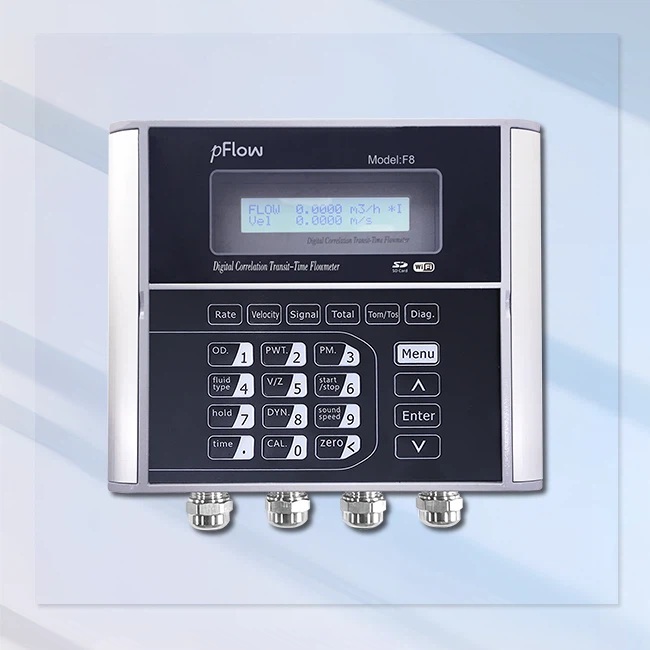
F8 series ultrasonic wall flow meter adopts advanced modular all-in-one design, independent menu operation, LCD backlight display, WIFI communication,it is suitable for the continuous measurement of building automation system, meeting different measurement requirements.
The unique digital signal processing technology enhances the anti-interference ability. Combined with the precision clamp on/insertion flow sensor F8 features more stable measurement signal, more accurate measurement, simpler installation way, easier maintenance mode.
F8 series wall mounted flow meter is a state-of-the-art transit time ultrasonic flow meter. Designed using the latest digital technology and low-voltage broadband pulse transmission. While principally designed for full-pipe clean liquid applications.The instrument is tolerant of liquids with small amounts of air bubbles or suspended solids found in most building automation system. Comparing with other traditional flow meter or ultrasonic flow meter, it has distinctive features such as WIFI communication,high precision,high reliability, high capability and low cost. Other features:TVT technology designed. Less hardware components, low voltage broadband pulse transmission, low consumption power. Clear, user-friendly menu selections make flow meter simple and convenient to use. Daily, monthly and yearly totalized flow. Parallel operation of positive, negative and net flow totalizes with scale factor (span) and 7 digit display, while the output of totalize pulse and frequency output are transmitted via relay and open collector. Wall mounted ultrasonic flow meters offer advantages such as non-intrusive installation, versatility, high accuracy, low maintenance, and remote monitoring capabilities. These features make them a preferred choice for many flow measurement applications across different industries.
Product Parameter (Specification)
|
Product Parameter |
|
|
Flow range |
±0.03ft/s ~ ±40ft/s (±0.01m/s ~ ±12m/s) |
|
Accuracy |
±0.5% of measured value (for ±1.5ft/s~±40ft/s) |
|
Fluid |
Water, Sea Water, Kerosene, Fuel Oil, Alcohol |
|
Pipe material |
Carbon Steel, PVC, Stainless Steel, Asbestos, Cast Iron, Aluminum, Ductile Iron, Fiber Glass-Epoxy, Copper, Other |
|
Pipe size |
Clamp-on:1"to 200" (25mm to 5000mm) |
|
Outputs |
Analog output: 4~20mA, max load 750 . Pulse output: 0~9999Hz, OCT, (min. and max. frequency is adjustable) Relay output: SPST, max 1Hz,(1A@125VAC or 2A@30VDC) |
|
Communication |
WIFI, RS232&RS485 terminal Modbus Protocol |
|
Temperature |
Transmitter: -14℉~122℉(-10℃~50℃) Transducer: -40℉~176℉(-40℃~80℃, standard) |
Product Application
- Industrial operations: By precisely measuring the flow of liquids through pipes, wall mounted flow meters-more especially, the F8 model-play a crucial part in industrial operations. This versatile application is applicable to a wide range of industries, including manufacturing, chemical processing, and the petrochemical sector, where accurate measurements are critical to maintaining both product quality and operating efficiency.
- Water Treatment: Wall flow metres play an essential role in the complex treatment process of water treatment plants by keeping an eye on and controlling the flow of chemicals, water, and other fluids. This crucial role ensures ideal water quality and raises the general effectiveness of water treatment processes.
- HVAC Systems: In the context of Heating, Ventilation, and Air Conditioning (HVAC) systems, flow metre integration is a critical component for air and liquid flow measurement and control. This careful monitoring guarantees effective temperature control, which promotes energy efficiency and comfortable interior spaces.
- Research and Development: Wall flow metres are a vital instrument in labs and research centres, having been at the forefront of this field for many years. These instruments provide precise and thorough measurements of fluid flow and fit in smoothly with testing procedures and experimental settings. This precision allows researchers to unveil novel insights and drive innovation in various scientific domains.
- Pharmaceuticals: wall mounted water flow meter are essential tools in the manufacturing environment of pharmaceuticals because they balance quality and precision at the same time. Precise fluid flow management and measurement are essential in these complex processes to achieve the best possible product quality. These instruments provide a substantial contribution to the manufacturing of medications that satisfy stringent regulatory requirements and guarantee patient safety by carefully monitoring and controlling flow rates.
Product Details

Product Qualification
For more than three decades, Gentos has been at the forefront of manufacturing top-notch, competitively priced ultrasonic flow meters, earning a reputation for excellence. We are industry leaders in innovation and eco-friendly products, striving to elevate industry standards while keeping costs reasonable.
As our product line continues to evolve, we remain committed to enhancing functionality and pushing the boundaries of quality and performance. Throughout the process of designing new products, we actively seek input from our valued customers, recognizing their invaluable contributions in shaping our success. It is through this collaborative approach that we have carved out a distinctive position in an industry that demands a seamless fusion of safety and performance.
Why Choose Us
Comprehensive System
Gentos operates as a cohesive unit, with all departments working closely together to provide efficient and professional services to our customers.
Professional Solutions
We provide professional solutions to customers with diverse flow meter requirements and limited understanding of flow meter parameters in their applications.
Caring Service
Our technicians are committed to providing prompt and exceptional support to customers, addressing their challenges with efficiency and professionalism.
Technical Expertise
Gentos personnel are certified and our production processes and products meet quality and technical standards.


What is Wall Mounted Meter
A wall-mounted meter is an instrument designed for the measurement of utilities such as electricity, water, gas, or heat. It is affixed to a wall for convenience, accessibility, and protection from environmental factors. These meters are typically installed where consumption is being monitored, such as in residential, commercial, or industrial buildings.
In the case of an electric meter, it records the amount of electric energy that has been consumed by a residence or a business. Water meters measure the volume of water passing through a pipe, which is useful for tracking usage and billing purposes. Gas meters work similarly but are used to measure the flow of natural gas or liquefied petroleum gas. Heat meters specifically measure the thermal energy transferred to a space or object.
Wall-mounted meters are equipped with dials, displays, or digital readouts that allow users or service providers to view the consumption data. They often have a cover or housing to protect the internal mechanisms from dust, moisture, and tampering. These meters can be read manually or, increasingly, are equipped with technology to enable remote readings, facilitating automated billing and usage tracking.
The installation of wall-mounted meters is subject to local regulations and standards to ensure accuracy and safety. Regular inspection and maintenance are important to ensure their longevity and accuracy over time.
Wall mounted meters serve the primary purpose of accurately measuring and recording the consumption of various utilities within a building or facility. Whether it's measuring electricity, water, gas, or heat, these devices provide a way to track the usage over time, which is essential for billing, resource management, and conservation efforts.
In the context of electricity, a wall-mounted meter records the kilowatt-hours (kWh) consumed, allowing utility companies to bill consumers based on their actual usage. Similarly, for water, these meters calculate the volume of water passing through a supply line, enabling water utilities to charge accordingly.


Gas meters quantify the amount of natural gas or propane used, which is vital for both billing and safety, as excessive usage may indicate a leak or other issue. Heat meters, on the other hand, are used to monitor the thermal energy provided by heating systems, which helps in managing energy consumption and costs associated with heating a space.
Additionally, wall-mounted meters can be used for monitoring and control purposes. For example, in a manufacturing facility, electricity meters might be used to monitor the power consumption of different machines, helping to identify areas for energy efficiency improvements. In a residential setting, understanding water usage patterns can lead to the identification of leaks or inefficient fixtures, prompting necessary repairs or upgrades to conserve water.
Overall, the wall-mounted meter serves as a fundamental tool for both individuals and businesses to manage their utility consumption, ensure accurate billing, and promote sustainable practices.
What Types of Wall Mounted Meters are Available?
There are various types of wall mounted meters available, depending on the specific application and parameter being measured. Here are some common types:
Electrical meters
These meters measure electrical parameters such as current, voltage, power, and energy consumption. They are used for monitoring electrical circuits and systems.
Water meters
These meters measure the flow of water through pipes and plumbing systems. They are used for tracking water usage and billing purposes.
Gas meters
These meters measure the flow of natural gas or propane. They are used for monitoring gas consumption and billing purposes.
Thermometers
These meters measure temperature. They can be used for monitoring indoor or outdoor temperatures, or for specific applications such as HVAC systems.
Humidity meters
These meters measure humidity levels. They are used for monitoring indoor air quality and controlling moisture levels in buildings.
CO2 meters
These meters measure carbon dioxide levels. They are used for monitoring indoor air quality and ensuring proper ventilation.
pH meters
These meters measure the acidity or alkalinity of a solution. They are used for monitoring pH levels in water, soil, or other solutions.
Light meters
These meters measure the intensity of light. They are used for lighting design, photography, and plant growth monitoring.
Sound meters
These meters measure sound levels. They are used for noise measurement and control in industrial, commercial, and residential settings.
How is a Wall Mounted Meter Installed?
Installing a wall mounted meter typically involves the following steps:
1. Select the appropriate location: Choose a flat and accessible wall surface where the meter can be easily read and accessed. Ensure there is sufficient space for the meter and any associated wiring or piping.
2. Prepare the wall surface: Clean the wall and remove any obstructions or debris. If necessary, drill holes for mounting screws or brackets.
3. Mount the meter: Follow the manufacturer's instructions to attach the meter to the wall using screws, brackets, or other mounting hardware. Ensure the meter is securely fastened.
4. Connect the necessary wiring or piping: If the meter requires electrical or fluid connections, follow the provided guidelines to connect the wires or pipes correctly. Make sure all connections are tight and leak-free.
5. Power on and configure the meter:Depending on the type of meter, you may need to connect it to a power source or configure settings such as measurement units, calibration, or communication protocols.
6. Test and verify the meter: Once installed, check the meter's display or readings to ensure it is functioning properly. Refer to the meter's documentation for any specific testing procedures.
7. Document the installation: Keep a record of the installation details, including the meter model, serial number, and installation date for future reference.
It's important to note that the installation process may vary depending on the specific type and model of the wall mounted meter. Always refer to the manufacturer's instructions and guidelines for detailed installation instructions.
Can Wall Mounted Meters Be Used For Measuring Different Parameters?
Electricity Meters: These measure the amount of electric energy consumed, typically in kilowatt-hours (kWh). They can also measure voltage, current, power factor, and energy quality metrics.
Water Meters: These measure the volume of water that has passed through them. Some advanced models can also provide information on pressure variations and the direction of flow, which can be useful for detecting leaks or reverse flow incidents.
Gas Meters: These measure the volume of gas used, which is usually converted into energy terms based on the calorific value of the gas. Advanced gas meters may include sensors for detecting the type and concentration of gases.
Heat Meters: Also known as energy meters, these measure the thermal energy transferred, usually in kilowatt-hours (kWh). They are essential for tracking the efficiency of heating systems and can differentiate between consumed and returned energy.
Multi-Utility Meters: Some meters are capable of measuring more than one utility. For example, "smart meters" can measure electricity, gas, and water consumption, providing a comprehensive overview of energy use within a household or building.
Sub-Meters: These are smaller meters that can be installed within a property to measure the usage of a specific area or circuit. They can measure the same parameters as regular meters but are used for more detailed analysis and billing purposes.
Are Wall Mounted Meters Weatherproof?
The weatherproofness of wall mounted meters depends on the specific model and its intended application. Some wall mounted meters are designed to be weatherproof, allowing them to be used in outdoor environments or exposed to elements such as rain, snow, or sunlight. These meters are typically sealed or protected to prevent moisture, dust, or other contaminants from entering the meter housing.
However, not all wall mounted meters are weatherproof. Some models may be intended for indoor use only and may not have the necessary sealing or protection to withstand harsh outdoor conditions. It's important to check the specifications of the specific meter you are interested in to determine its weatherproofness.
If you need to install a wall mounted meter in an outdoor or exposed location, it's recommended to choose a meter that is specifically designed and labeled as weatherproof. These meters will typically have IP (Ingress Protection) ratings that indicate their level of protection against dust, water, and other elements.

Wall-mounted meters can have various power sources depending on their design and intended use. Common power source options include:
Batteries: Many modern meters, especially those designed for remote or mobile applications, operate on battery power. This allows for installation in locations without immediate access to electrical infrastructure.
Internal Power Supply: Meters that are permanently installed within close proximity to electrical services may have an internal power supply that draws a small amount of power directly from the circuit being monitored. This is known as "own-usage" or "self-powered" operation.
AC Power: Meters installed in fixed locations with reliable access to electrical infrastructure may be powered directly by alternating current (AC) from the grid. This ensures continuous operation without the need for battery replacement.
Solar Power: In some cases, particularly for remote or off-grid installations, meters may include solar panels as a power source. These convert sunlight into electricity to power the meter, which can be particularly useful for water or gas meters in agricultural settings.
Line Voltage: For electricity meters, especially those in residential or commercial settings, the meter may be powered by the line voltage itself through a small tap that draws minimal power.
DC Power: Some meters may be designed to operate on direct current (DC), which can be supplied by batteries or connected to a DC power source, such as a solar panel array.
Wireless Power Transfer: Emerging technologies may utilize wireless power transfer methods, although this is not yet widespread for wall-mounted meters.
The choice of power source depends on several factors including the environment where the meter is installed, the availability of power, the complexity of the meter's functions (such as communication capabilities), and the requirements for continuous operation. For instance, smart meters that communicate usage data back to a central system might require a more reliable power source, such as AC power or a long-lasting battery, to ensure uninterrupted data transmission.
Can Wall Mounted Meters be Upgraded or Retrofitted?
Yes, in many cases, wall mounted meters can be upgraded or retrofitted. The ability to upgrade or retrofit a meter depends on several factors, including the design of the meter and the availability of compatible upgrades or accessories.Some wall mounted meters may have interchangeable components or modules that can be replaced or upgraded to enhance their functionality or performance. For example, you might be able to upgrade the meter with a more advanced sensor, increased measurement range, or additional features.Retrofitting may involve replacing the existing meter with a newer model that offers improved capabilities. This can be done if the new meter is physically compatible with the existing mounting infrastructure and wiring.It's important to note that upgrades or retrofits may require specific knowledge or expertise. It's recommended to consult the manufacturer or a qualified technician to ensure the compatibility and proper installation of any upgrades or retrofits.Before considering an upgrade or retrofit, it's also a good idea to assess whether the existing meter meets your current and future needs. Upgrading might not be necessary if the meter is still functioning properly and provides the required measurements.
Yes, many modern wall-mounted meters are equipped with the capability to store and recall usage data. These meters often feature built-in memory units that can retain historical consumption records, such as the total energy used, peak demand levels, and time-of-use data. The stored information can be crucial for analyzing consumption patterns, identifying trends, and facilitating more efficient energy management.
These meters can be standalone devices with limited data storage and retrieval capabilities, or they can be part of a larger networked system, commonly referred to as "smart meters." Smart meters are designed to communicate with a centralized database or a local data collection unit via various communication technologies, such as cellular, radio frequency (RF), power line communications (PLC), or Wi-Fi.
The stored data can be accessed locally via a display interface on the meter itself, or remotely via the aforementioned communication methods. Remote access allows for real-time monitoring, automated billing processes, and the potential for demand response management, where utilities can adjust energy consumption based on grid conditions.
To retrieve the data, users or utility providers may employ handheld devices, such as data loggers or readers, which connect to the meter and download the stored information. Alternatively, in the case of smart meters, the data may be automatically sent at predefined intervals to a central server for analysis and reporting.
The ability of wall-mounted meters to store and recall data greatly enhances their functionality, providing valuable insights for both end-users and utility companies regarding energy consumption and management.
Gentos Measurement & Control Co., Ltd is a leading manufacturer of ultrasonic flowmeters with over three decades of experience in fluid measurement.
Our pFlow brand has gained a strong reputation and is highly regarded in Asia, Europe, and America. Gentos Product line includes Clamp on flowmeters, BTU meters, IoT Ball Valves, providing versatile solutions for various applications.
Hot Tags: wall mounted meter, China wall mounted meter manufacturers, suppliers, factory, measurement of industrial waste water flow, BMS Water Meter, Industrial Ultrasonic Flow Meters, semiconductor parts cleaning, beer flow sensor, portable ultrasonic water flow meter