

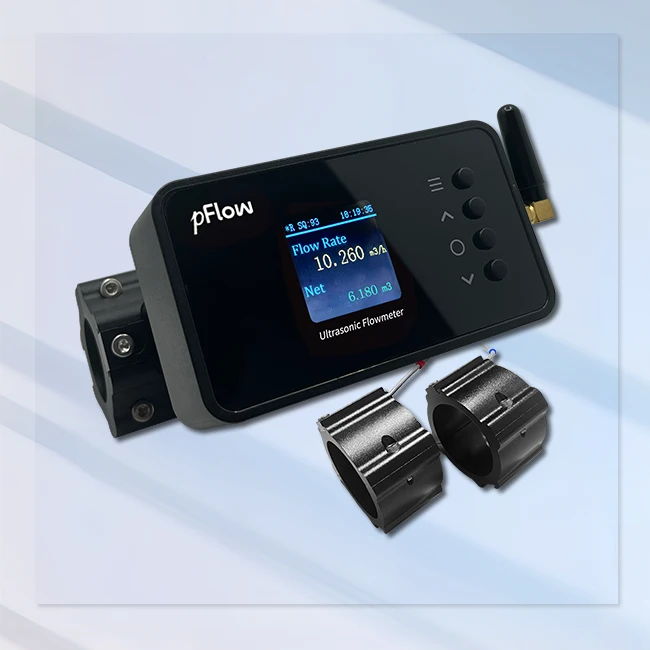
Product Introduction
D118 is a state-of-the-art transit time waste water flow meter. Designed using the latest digital technology and low-voltage broadband pulse transmission. While principally designed for full-pipe clean liquid applications. The instrument is tolerant of liquids with small amounts of air bubbles or suspended solids found in most industrial environments. Comparing with other traditional flow meter or ultrasonic flow meter, it has distinctive features such as high precision, high reliability, high capability and low cost, other features like TVT technology designed. Less hardware components, low voltage broadband pulse transmission, low consumption power. D118 has clear, user-friendly menu selections make flow meter simple and convenient to use for waste water. The device can record daily, monthly and yearly totalized flow. Parallel operation of positive, negative and net flow totalizes with scale factor (span) and 7 digit display, while the output of totalize pulse and frequency output are transmitted via relay and open collector. This waste water flow meter can also measure the temperature up to 150 degrees of liquid, the sensor is the clamping-on type installation does not need to damage the pipeline and easy to install. The product D118 contains a variety of certificates of conformity, and will definitely be calibrated and tested before leaving the factory and issued the corresponding test report. Our after-sales service is also complete, and there are few quality problems.
Product Parameter
|
Product Parameter |
|
|
Flow range |
±0.03ft/s ~ ±40ft/s (±0.01m/s ~ ±12m/s) |
|
Accuracy |
±0.5% of measured value (for ±1.5ft/s~±40ft/s) |
|
Fluid |
Water, Sea Water, Kerosene, Fuel Oil, Alcohol |
|
Pipe material |
Carbon steel, stainless steel, PVC, Aluminum, Cast iron |
|
Pipe size |
Clamp-on:1"to 200" (25mm to 5000mm) |
|
Outputs |
Analog output: 4~20mA, max load 750 . Pulse output: 0~9999Hz, OCT, (min. and max. frequency is adjustable) Relay output: SPST, max 1Hz,(1A@125VAC or 2A@30VDC) |
|
Communication |
RS232&RS485 |
|
Temperature |
Transmitter: -14℉~122℉(-10℃~50℃) Transducer: -40℉~176℉(-40℃~80℃, standard) |
Applications
Waste water Management: Flow meters are crucial instruments in the wastewater industry, aiding in the measurement and management of water flow in various processes. D118 is used to measure the flow of untreated wastewater entering wastewater treatment plants. This helps in assessing the volume of incoming wastewater and planning treatment processes accordingly. Similarly, flow meters are employed to measure the flow of treated wastewater leaving treatment plants. This is essential for compliance monitoring and ensuring that treated water meets regulatory standards before discharge. D118 is used in sludge handling processes to measure the flow rates of sludge within the treatment plant. This information aids in optimizing the treatment and disposal of sludge. Flow meters play a crucial role in controlling the dosing of chemicals in wastewater treatment processes. This includes measuring and regulating the flow of coagulants, flocculants, disinfectants, and other chemicals to optimize treatment efficiency. In activated sludge processes, flow meters are utilized to control the aeration rates. Proper aeration is crucial for promoting biological treatment and optimizing the removal of pollutants. D118 can installed in sewer systems to monitor the flow rates of wastewater in different sections of the network. This information helps in identifying areas with high or low flow, detecting blockages, and planning maintenance activities. It will assist in monitoring storm water flow rates to prevent overflow and flooding during heavy rainfall events. This is crucial for managing combined sewer systems and preventing the discharge of untreated wastewater. Flow meters are used to monitor the efficiency of pumps in wastewater treatment plants. By measuring the flow rates, operators can ensure that pumps are operating optimally and adjust settings as needed. It can employed to measure the flow rates of wastewater discharged by industrial facilities. This helps in regulating industrial discharges and ensuring compliance with environmental regulations. And it used to detect abnormal flow rates in sewer systems, which may indicate infiltration or inflow of groundwater or storm water. Identifying and addressing such issues helps in preventing system overloads. Flow meters are applied in systems that reuse treated wastewater for non-potable purposes. They measure the flow rates of reclaimed water, supporting sustainable water reuse practices. And provide accurate data for compliance reporting, ensuring that wastewater treatment plants adhere to regulatory standards and discharge permits. Waste water flow meter D118 in the wastewater industry contribute to efficient treatment processes, environmental protection, and regulatory compliance by providing accurate measurements and control over the flow of wastewater and associated parameters.
Product Details


Product Qualification
Gentos is committed to collaborating with clients to effectively utilize fluid resources, offering comprehensive solutions for energy conservation, emission reduction, minimizing fluid resource utilization losses, precise measurement, and enhancing the efficient utilization of fluid resources.
With the successful application of its transit-time patent technology, Gentos' ultrasonic flow metres find applications not only in traditional industries like the petroleum, water resources, chemical, urban heating, and power industries, but also in research institutions for measurement purposes.
At the same time, Gentos also pays attention to the development of employees, providing them with a clear promotion system and comprehensive training opportunities.
In terms of team structure, Gentos cultivates the advancement of seasoned workers while also introducing managerial talent gradually at different levels, resulting in a well-balanced mix of new and seasoned staff members to guarantee the company's constant and robust development.
Innovation is the hallmark of Gentos as we continuously search for the best fluid measurement technologies and applications for humanity, transforming them into standards and regulations for use in the field of fluid measurement.
Why Choose Us
Comprehensive System
Gentos operates as a cohesive unit, with all departments working closely together to provide efficient and professional services to our customers.
Professional Solutions
We provide professional solutions to customers with diverse flow meter requirements and limited understanding of flow meter parameters in their applications.
Caring Service
Our technicians are committed to providing prompt and exceptional support to customers, addressing their challenges with efficiency and professionalism.
Technical Expertise
Gentos personnel are certified and our production processes and products meet quality and technical standards.


What is Waste Water Flow Meter
A wastewater flow meter is a device used to measure the flow rate of wastewater in a system. These meters are critical for monitoring and controlling the flow of water in sewage treatment plants, industrial effluent systems, and municipal water treatment facilities. There are various types of wastewater flow meters, each utilizing different technologies to measure flow rates accurately.
Some common types of wastewater flow meters include:
Electromagnetic Flow Meters: These utilize Faraday's law of electromagnetic induction to measure flow. They contain no moving parts and are ideal for conducting and dirty liquids, making them suitable for wastewater applications.
Turbine Flow Meters: These meters have a series of blades rotating in the flow stream. The speed of rotation is proportional to the flow rate. Turbine meters are precise but can be affected by sediment and require maintenance.
Pitot Tube Meters: These are used for open channel flow measurement. A differential pressure transmitter measures the velocity of the wastewater flowing in a channel or flume.
Ultrasonic Flow Meters: They use ultrasonic waves to measure the velocity of the fluid. These are non-intrusive, accurate, and can handle a wide range of liquids.
Vortex Shedder Meters: These meters measure flow by sensing the frequency at which vortices are shed from a bluff body in the flow stream.
Wastewater flow meters must be robust to withstand the corrosive nature of wastewater, which often contains suspended solids, bacteria, and chemicals. Proper selection and installation of wastewater flow meters are essential to ensure accurate measurements, reliable operation, and compliance with environmental regulations. These meters facilitate process control, billing purposes, and environmental discharge monitoring. Regular maintenance and calibration are necessary to maintain the accuracy and longevity of wastewater flow meters.
The accuracy of a wastewater flow meter is typically measured by comparing the readings obtained from the meter with a reference standard or a known flow rate under controlled conditions. The accuracy is expressed as a percentage of the reading or as a fraction of the range (i.e., full-scale deflection).
To determine the accuracy, the following steps are generally taken:
Preparation: Ensure that the flow meter is properly installed according to manufacturer guidelines and that the wastewater stream is representative of the actual conditions.
Calibration: Calibrate the flow meter against a master meter or a flow standard that has been calibrated and certified by an accredited laboratory. For example, a closed conduit calibration using a piston prover or a wet well using a surge tank can be employed.
Test Conditions: Maintain consistent conditions during testing to ensure accurate results. These conditions include temperature, pressure, and the composition of the wastewater.
Flow Range: Test the flow meter at different flow rates, typically covering its entire operating range. The accuracy should be assessed at low, mid, and high flow rates to understand its performance across the spectrum.


Repeatability: Perform multiple measurements to assess repeatability. The variation in the meter's readings should be within acceptable limits for the device to be considered accurate.
Bias: Calculate the bias as the difference between the flow meter readings and the reference meter readings, averaged over all the tests conducted.
Linearity and Hysteresis: Evaluate the linearity of the meter to ensure that the measurement is directly proportional to the flow rate. Hysteresis tests determine if the meter can return to the same reading after being moved through a range of flow rates.
Temperature and Pressure Effects: Measure any changes in accuracy due to variations in temperature and pressure to ensure that the meter remains accurate under different operating conditions.
Reporting: Prepare a detailed report that includes the test conditions, methods used, results, and conclusions about the meter's accuracy.
The accuracy of a flow meter is critical for wastewater management, as it impacts billing, compliance with environmental regulations, and the planning of infrastructure upgrades. Regular calibration and maintenance are required to ensure that the meter maintains its accuracy over time.
Waste Water Flow Meter - Why is Correct Installation and Set-Up Essential?
Any consent to discharge permit will require correct installation, operation and maintenance of your flow measurement system.
Careful and knowledgeable selection of measurement system is important as each flow meter type varies in its suitability depending on:
The nature of the liquid to be measured
The environmental conditions
The rate and volume of flow
Whether the flow is open channel or an enclosed pipe
A pumped or gravity system
Size of pipe (for enclosed situations)
Upstream conditions to ensure confidence in either a fully developed flow profile (closed pipe) or suitable hydraulic conditions (open channel)
Downstream conditions to ensure no negative flow impact
Correct and regular calibration of any flow meter is fundamental to confirm accuracy of data. In an ideal world a flow meter would never be affected by the conditions in which it is installed, however aggressive environments and other factors can compromise their initial installation. There is also the chance that an old system may never have been installed properly in the first instance. Although no flow measurement system is 100% accurate, with all carrying some level of uncertainty, correct calibration and robust maintenance can ensure that this level is kept to a minimum.
How is the Wastewater Flow Monitored?


The most effective, and accurate way to monitor wastewater flow is by devising and implementing a specific wastewater flow survey. Or for a more permanent solution, implement an ongoing monitoring project to gather data and generate regular analysis reports that can be used inform and improve.
Wastewater flow meters are predominantly used to calculate the volumetric or mass flow of wastewater, sewage or trade effluent. They work by measuring the amount of wastewater that flows through, under or around flow meter sensors.
There are three specific ways to measure open channel water using a wastewater flow meter, each of which works in a different way:
1) Insertion wastewater flow meter:
Usually referred to as an 'area velocity flow meter'. The MSFM is a perfect example of an insertion wastewater flow meter. Installed at the bottom of the pipe in the water, an insertion wastewater flow meter will measure depth and velocity and calculate flow. It is one of the most effective methods of wastewater flow monitoring.
Detectronic sensors measure the depth of water above the sensor and use programmed pipe/channel parameters to calculate the wetted cross-sectional area. This is then multiplied by the velocity (measured using ultrasonic Doppler) of the effluent stream to provide flow.
The benefit of this type of monitoring is that it is highly accurate due to its position directly within the effluent stream.
2) Non-contact water flow meter:
Works similarly to an insertion flow meter but measures level and surface velocity and is installed above the flow of wastewater rather than in the actual pipe.
Similar to the insertion wastewater flow meter, this meter also calculates flow using velocity multiplied by wetted cross-sectional area.
A non-contact flow meter is ideal for circumstances where equipment cannot come into contact with the flow but isn't as accurate as an insertion wastewater flow meter since surface friction will always affect data.
3) Primary device:
Hydraulic structures, such as weirs and flumes, are both examples of primary devices that can be used to monitor flow measurement. Our equipment is used extensively in these applications. Using an ultrasonic level-only system, such as the MFSM Lite or Orakel Primary Device, and the known mathematical relationship detailed in ISO 1438:2008 (Hydrometry – open channel flow measurement using thin-plate weirs), flow can be calculated without the need for insertion flow meters.
The downside of this method is that it often demands a degree of civil engineering work before it can be realised due to the forward planning required for the physical installation of the primary device. Channels are narrowed too which can cause potential blockages meaning that primary devices are rarely suitable for network monitoring, but they are often used for measuring trade effluent in industrial applications.
Can Waste Water Flow Meters Be Used in Different Types of Waste Water?
Waste water flow meters can typically be used in different types of waste water, but their suitability may depend on the specific characteristics of the waste water. Some flow meters are more suitable for clean or slightly contaminated waste water, while others can handle more challenging or dirty fluids.
Factors to consider include the viscosity, conductivity, suspended solids, and chemical composition of the waste water. Some flow meters may be more prone to clogging or damage when dealing with highly contaminated or abrasive waste water.
It's important to choose a flow meter that is designed to handle the particular type of waste water you are measuring. Manufacturers often provide information on the compatibility of their flow meters with different waste water types.
In some cases, it may be necessary to pretreat the waste water or use special configurations or accessories to ensure accurate and reliable measurements. Consulting with flow meter experts or referring to the manufacturer's guidelines can help determine the most appropriate flow meter for your specific waste water application.
What are the Factors That Affect the Measurement of Waste Water Flow?
Several factors can influence the accuracy of measuring wastewater flow in engineering applications. These factors include:
Turbulence: High levels of turbulence within the wastewater stream can interfere with flow measurement devices, causing inaccuracies.
Viscosity: The viscosity of wastewater can vary significantly depending on the contaminants present. Thick or viscous wastewater can affect the flow rate measurement.
Temperature: Fluctuations in temperature can cause expansion or contraction of the wastewater, affecting the flow measurement.
Concentration of Solids: The concentration of suspended solids and dissolved substances in wastewater can affect the flow measurement. High solid concentrations can lead to blockages or inaccuracies in devices.
Flow Profile: The shape of the flow profile, whether it's laminar or turbulent, can impact the flow measurement. Devices designed for certain flow profiles may not function correctly with others.
Measuring Device Location: The placement of the flow meter within the pipe can affect measurements. For example, devices must be placed where the flow has stabilized after any influent disturbances.
Pipe Configuration: Pipe size, shape, and condition can all influence flow measurement. Deformations or irregularities in the pipe can cause measurement errors.
Pressure Drop: Devices that measure flow indirectly by calculating the pressure drop across an obstruction (such as orifice plates) can be affected by variations in pressure.
Electromagnetic Interference: Flow meters that rely on electromagnetic fields, such as magnetic flow meters, can be affected by external electromagnetic interference.
Maintenance and Calibration: Regular maintenance and calibration of flow measurement equipment are crucial for accurate readings. Sediment buildup, corrosion, or damage can affect the performance of the device.
Biological Growth: The formation of biofilms or algae on the walls of pipes or measurement devices can alter the flow characteristics and measurement accuracy.
Chemical Reactions: Chemical reactions within the wastewater can produce gas bubbles or precipitates, altering the flow pattern and affecting measurement devices.
Operating Conditions: The wastewater flow can be variable, with different flow rates during peak and off-peak times. Measurement devices must be capable of handling these changes without losing accuracy.
Can Waste Water Flow Meters Measure Flow in Both Directions?
Yes, many waste water flow meters are capable of measuring flow in both directions. These meters are often referred to as bi-directional flow meters.
Bi-directional flow meters use sensors or measurement techniques that can detect the flow of waste water regardless of the direction. They can provide separate readings for flow in the and reverse directions, or may simply indicate the flow direction along with the measurement.
This feature is useful in applications where the waste water may flow in either direction, such as in recirculation systems or when there are backflows. It allows for more comprehensive monitoring and analysis of the waste water flow.
However, it's important to note that not all waste water flow meters are bi-directional. Some models may only be designed to measure flow in one direction. So, it's always a good idea to check the specifications of the flow meter or consult with the manufacturer to ensure it meets your bi-directional measurement requirements.

Waste Water Flow Meter How Does it Work?
A waste water flow meter is a device used to measure the flow rate of waste water. It works by using various measurement principles, depending on the type of flow meter.
One common type is the electromagnetic flow meter, which measures the flow of conductive fluids by generating a magnetic field that induces an electric current in the fluid. The strength of the induced current is proportional to the flow rate.
Another type is the ultrasonic flow meter, which uses ultrasound waves to measure the velocity of the fluid. By transmitting and receiving ultrasound pulses across the flow, it can calculate the flow rate.
Some flow meters may also use mechanical methods, such as turbine or positive displacement, to measure the flow.
The specific working principle of a waste water flow meter can vary depending on the model and technology used. The flow meter typically converts the measured flow into an electrical signal that can be displayed, recorded, or transmitted for further analysis.
Waste water flow meters are important for monitoring and managing waste water systems, as they provide valuable data on flow rates, which can help optimize processes, detect leaks, and ensure compliance with environmental regulations.
If you have any more questions about waste water flow meters or need further explanation, let me know! I'm here to help.
Gentos Measurement & Control Co., Ltd is a leading manufacturer of ultrasonic flowmeters with over three decades of experience in fluid measurement.
Our pFlow brand has gained a strong reputation and is highly regarded in Asia, Europe, and America. Gentos Product line includes Clamp on flowmeters, BTU meters, IoT Ball Valves, providing versatile solutions for various applications.
Hot Tags: waste water flow meter, China waste water flow meter manufacturers, suppliers, factory, semiconductor parts cleaning, Industrial Ultrasonic Flow Meters, Waste Water Meter, MeterTube Platform, BMS Meter, BMS Water Meter